
Build a reliable information base
Make company facts, services, cases and contact information clear when official materials are incomplete or inconsistent.
Diguapeng’s generative engine optimisation (GEO) service is provided by Hefei Diguapeng Technology Co., Ltd. for businesses that want clear, well-supported information about their products and services in AI search. It starts with an initial diagnosis and baseline report, then uses the findings to plan website work, knowledge content, source-site publishing and repeat assessments.
Make company facts, services, cases and contact information clear when official materials are incomplete or inconsistent.
Develop useful product and industry content around the questions customers ask when comparing options.
Plan authorised publishing, updates and repeat measurements with an internal team or commissioned support.
Projects need accurate business materials, a named reviewer and an agreed scope. Existing websites and knowledge assets are reviewed before deciding what to keep, improve or build.
The first stage of a GEO engagement
Review the company’s current information, content, customer questions and AI visibility. The findings determine what to retain, improve or build, rather than starting with a preset content package.
Confirm the audience, services, buying questions and material already available.
Review official information, question coverage and agreed samples of search or AI answers.
Agree the content, site work, distribution and review steps that fit the business objective.
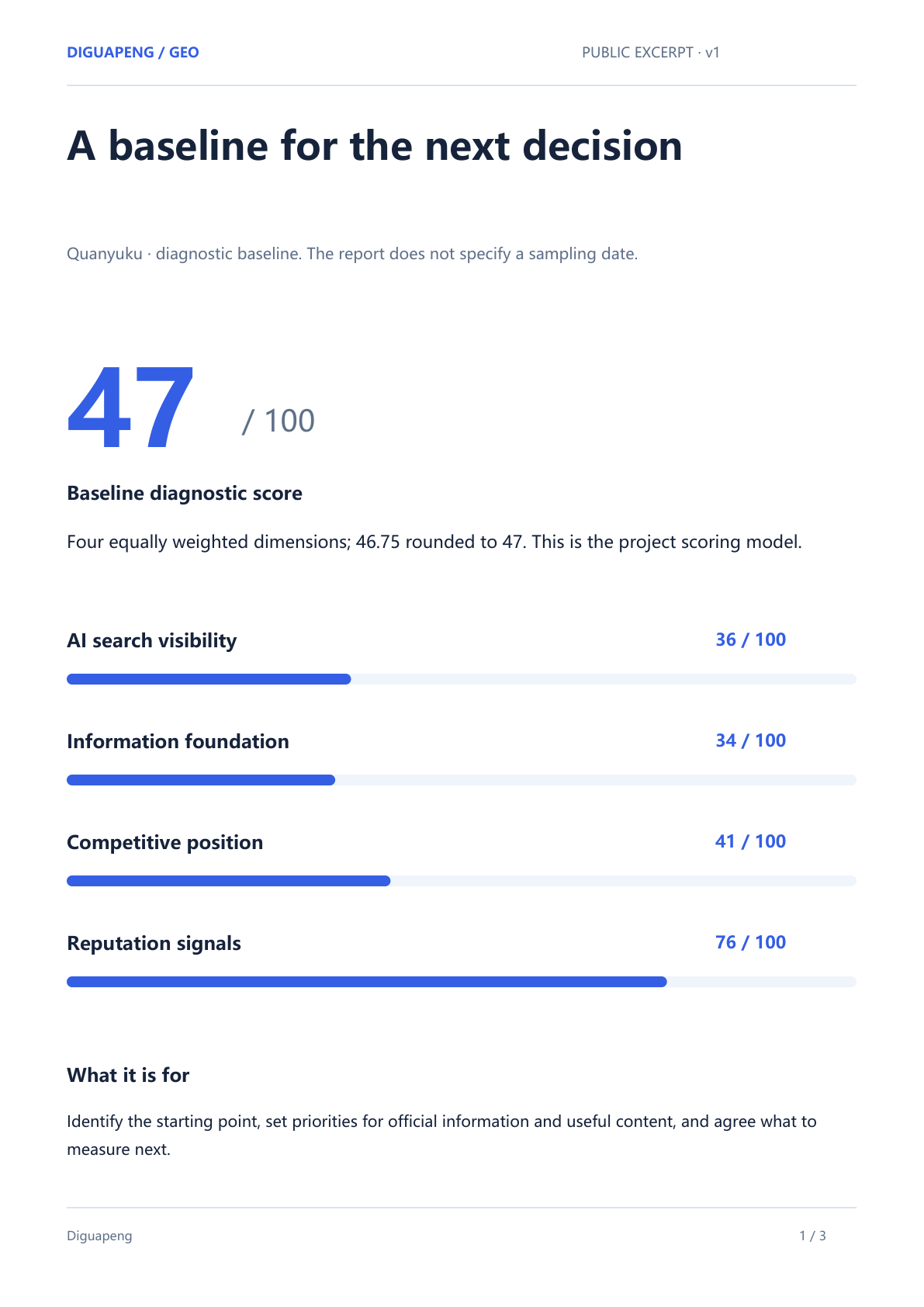
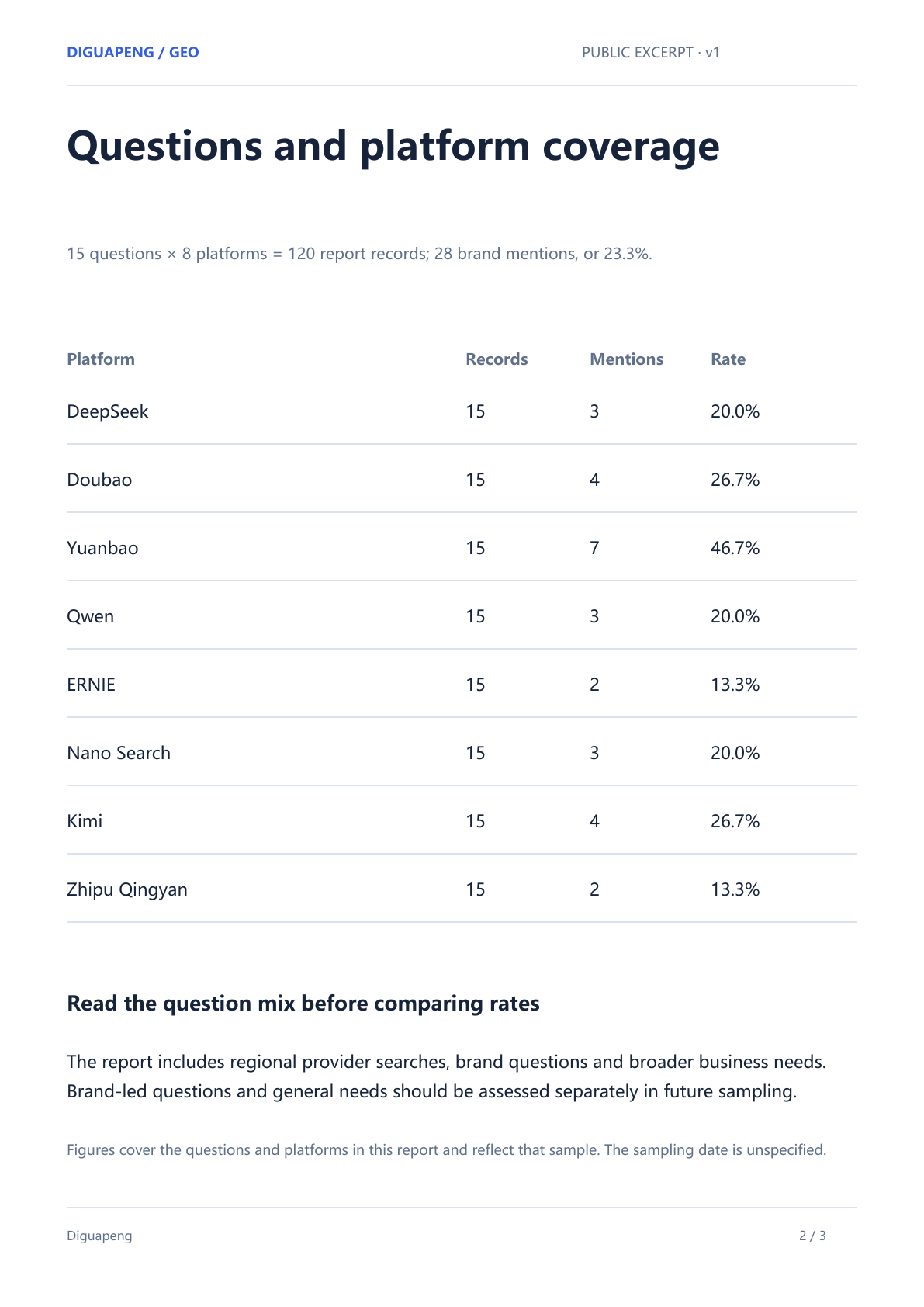
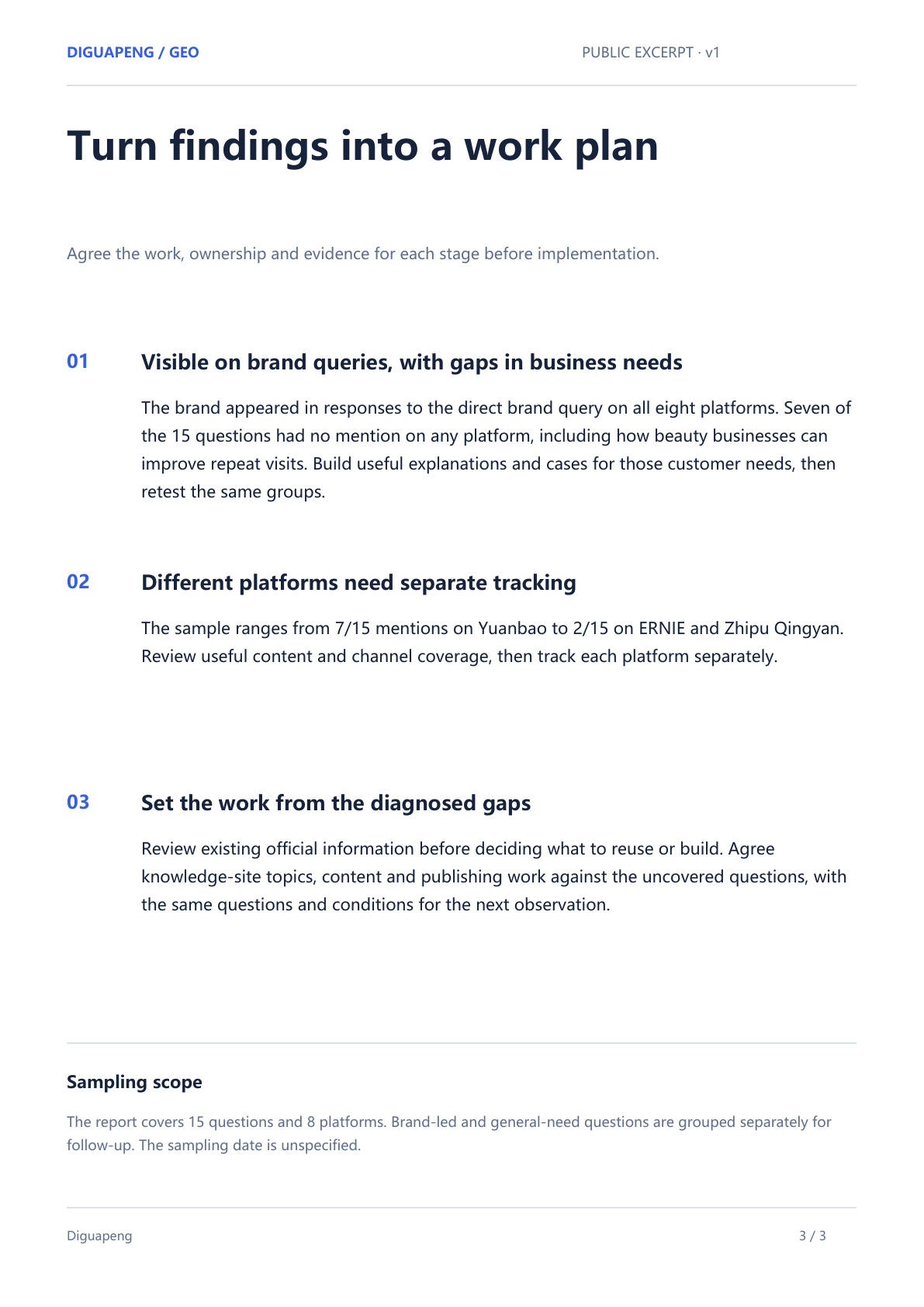
Diagnostic report sample
See how an initial assessment connects the company’s current information, AI search coverage and key gaps to priorities for website, knowledge and content work.
Foundation building
After the initial diagnosis, the agreed development plan comprises a company website, a company knowledge site and a GEO indexing test report. Existing assets are assessed for reuse or improvement; new construction, migration, management access and maintenance responsibilities follow the project scope.
1 website
Present the company, its products and services, suitable use cases, contact details and verifiable business information in a brand destination the company can continue to manage.
1 knowledge site
Company editors publish product knowledge, industry explanations, FAQs and supporting materials. Topics, sources and updates remain organised, while readers can comment on existing articles.
1 report
Record the agreed platforms, representative questions, test dates and conditions. Retain full answers and reviewable source links, distinguishing public-search discovery, brand mentions, source citations and recommendations.
The initial diagnostic report guides the development plan. The GEO test report records the agreed testing work; source-site publishing and ongoing operations have their own scope. Existing-site integration and any changes to the work or price are confirmed in the project quotation.
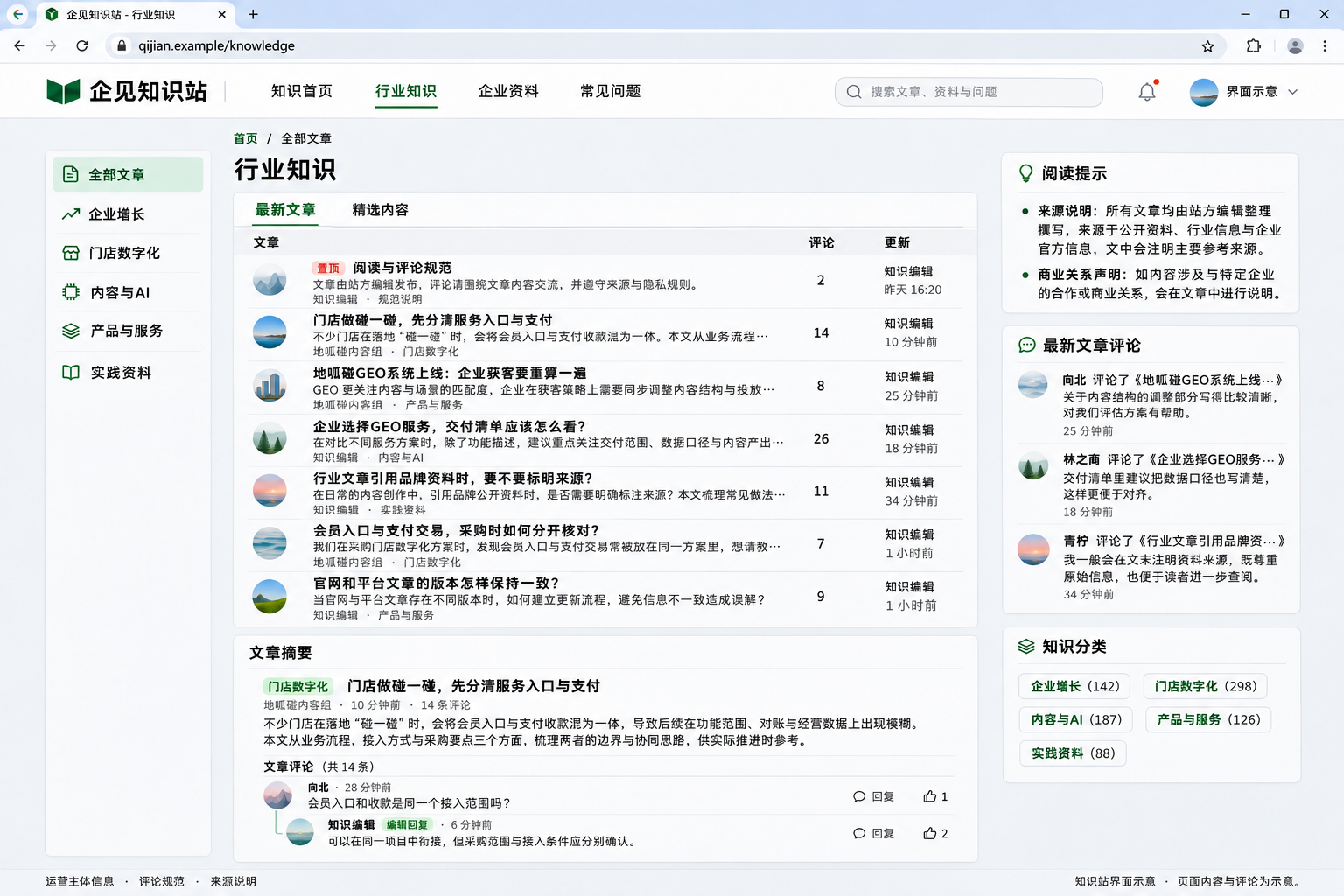
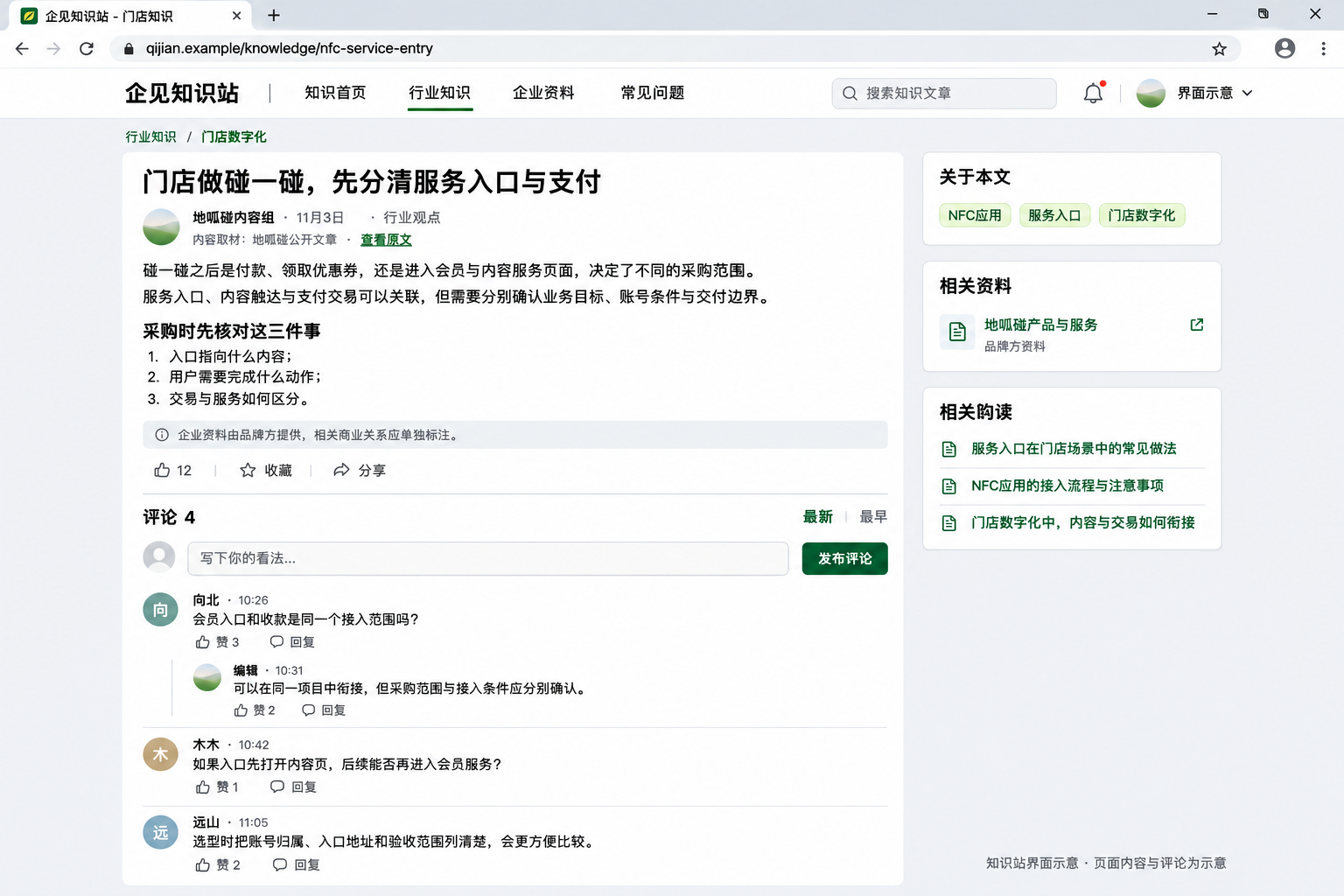
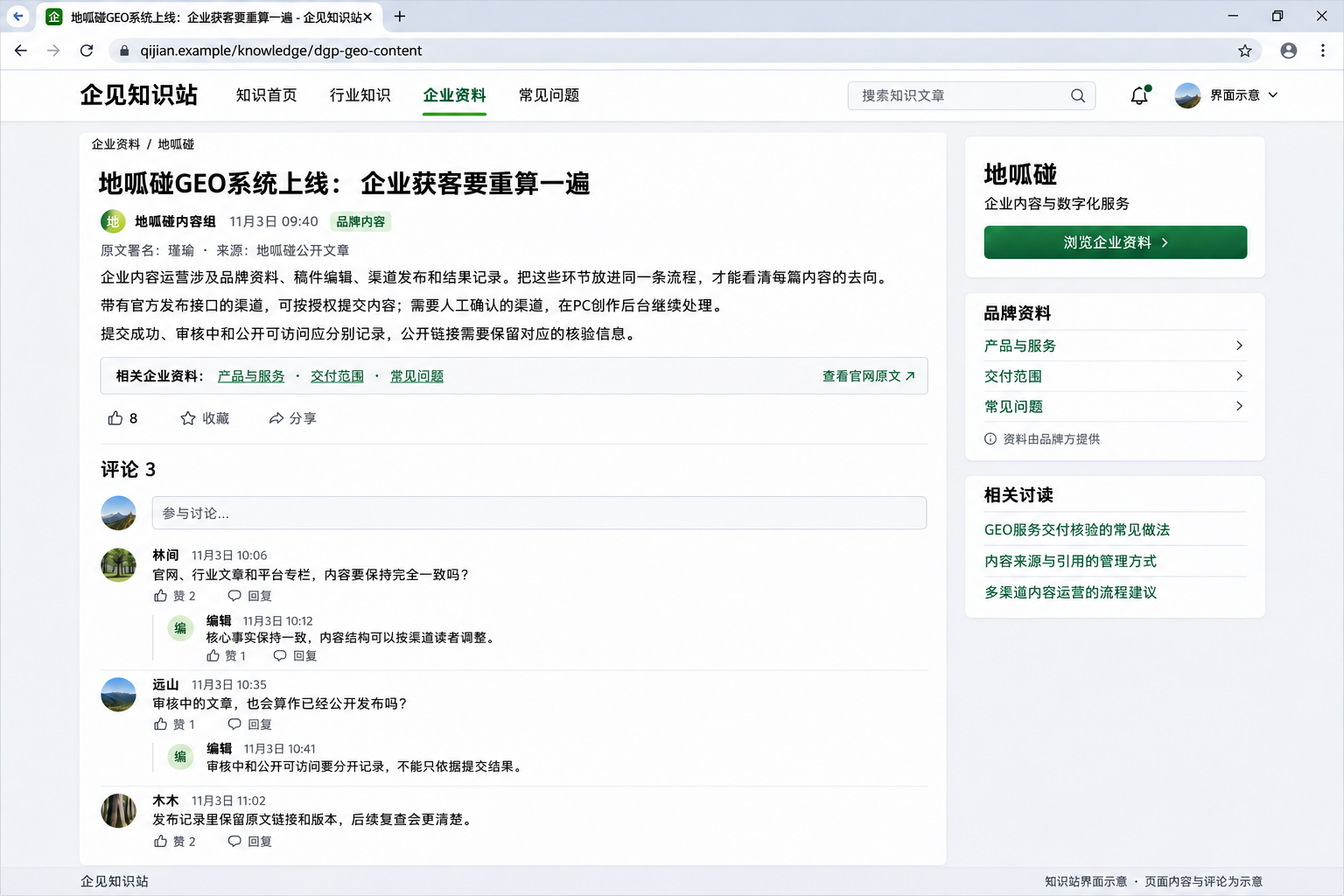
Company editors maintain product knowledge, industry explainers and brand articles in one searchable collection. Readers can discuss existing articles, giving the team a place to answer recurring questions and keep useful information current.
Chinese-language knowledge-site concepts. Article and comment content is illustrative.
 Open full image
Organise topics, featured articles and reading entry points.
 Open full image
Keep sources with professional content and discuss article-specific questions.
 Open full image
Explain products, services and suitable use cases using real business materials.
Ongoing operations
Develop content around genuine industry questions for each site’s readers. Identify sources and commercial relationships for brand-related materials, publish within the agreed permissions and site requirements, and retain public links, versions and update records.
Site count, content volume and timing follow the actual plan. Placement is not an independent endorsement; public publication, search discovery and AI citations are recorded separately.
See the original question and the store’s appearance in a Doubao answer.
View the teahouse record →Inspect a Doubao answer about NFC exposure providers in Hefei.
View the original answer →An internal team can buy GEO software to manage sources, drafts, reviews, schedules and publishing records. Commissioned GEO services start with an initial diagnosis, followed by the agreed development and operations plan. Software access and human work are itemised, and the company keeps its accounts.
| Option | Who it suits | Deliverables | Next step |
|---|---|---|---|
| GEO software | Enterprises with editorial and operations teams that want to manage ongoing content work themselves. | A GEO workspace, editable drafts, review and scheduling, channel states and result links; software scope and usage follow the purchase agreement. | Explore software capabilities |
| GEO human services | Businesses that need baseline diagnosis, information development or content-operations support. | An initial diagnostic report, followed by agreed website and knowledge-site work, drafts, publishing records and test reports; implementation scope is separately defined. | View service scope |
Knowledge & deployment
Organise product information, industry knowledge and writing material in Markdown files and folders, compatible with Obsidian Vault workflows. Original documents remain available for the company to keep, edit and move.
A local deployment can be configured for the enterprise environment. The application and synchronised knowledge content reside in the selected deployment environment. The deployment plan defines how knowledge synchronisation, AI models and publishing channels handle content.
Cloud deployments can use Yusys Financial Cloud services for monitoring, network and application protection, and security assessment. Protection, backup and operational response arrangements are defined for the project.
Separate fixed-scope service · 24 hours
For a standalone review of an existing website’s public pages, covering crawl entry points, entity facts, structured data, useful content and enquiry paths. It is not a required extra purchase before commissioning GEO; the GEO project’s initial diagnosis is agreed within that project.
Up to 25 priority pages
Order this review (Chinese) View review scope Public pages only; no back-office account requiredThe first step is to diagnose the company’s current information and content, then agree a plan based on the gaps and business priorities. The ¥999 public-site audit is a separate fixed-scope service, not a required extra purchase before a GEO engagement.
The existing website, useful content and permissions are included in the initial diagnosis. The plan specifies what can be reused or improved and whether any new build or migration is needed. Scope, management access, maintenance and fees follow the project quotation; replacement or free work is not presumed.
CNY 999 covers a public-facing review of 1 website and up to 25 priority URLs, with a PDF report and 1 revision within the agreed scope. No back-office account is required. The review checks crawl entry points, company and product facts, structured data, referenceable content and enquiry paths, then prioritises the next actions. Page changes, content production, channel publishing, ongoing measurement and GEO software are not included in this review fee; they require a separate scope.View order scope and terms (Chinese).
The standard review starts its 24-hour delivery clock only after both the website scope and actual receipt of payment have been confirmed. A full GEO project has a separate written schedule: once materials are complete, baseline work typically takes 5–10 working days and website optimisation 10–20 working days. The first trend review is recommended at least 28 days after publication. Permission delays, third-party review and complex industries may affect timing.View scheduling and change arrangements.
Software and human services can be purchased separately or combined for a project. An internal team can use GEO to manage materials, drafts, reviews, schedules and publishing records. Setup assistance, planning, editing or managed operations are commissioned separately. Software access, channel connections, usage, support and human deliverables are itemised; buying the software does not include managed operations.Explore GEO software.
A public-facing review requires only the website address and agreed public scope, not a back-office login. Setup and content work use the agreed project contact, approved brand materials and necessary authorisation for the company’s own publishing accounts. The company retains account ownership. Official API or PC-assisted publishing depends on platform requirements, and the channels are confirmed during setup.
Each full project is quoted separately by queries, platforms, languages, pages, content volume and retesting rounds, with applicable third-party costs itemised. Acceptance checks the agreed reports, page changes, approved drafts, channel states and result links. Measurement work retains query sets, sampling conditions, original answers and citations; website optimisation includes agreed crawl and structured-data checks. Scope changes, termination settlement and refund conditions follow the quotation or contract.View the acceptance checklist.
The service delivers agreed brand facts, content assets, publishing records and measurements to help a business identify and address visibility issues over time. Search indexing, AI citations and recommendations depend on platform mechanisms, content and the questions people ask; fixed rankings or improvement timelines cannot be guaranteed. Measurement records retain the questions, dates, answers and citations so they can be reviewed on a consistent basis.
Base delivery comprises 1 company website, 1 company knowledge site and 1 GEO indexing test report. Acceptance covers the agreed pages, articles, permissions, test records and management or maintenance scope. Source-site content publishing and ongoing operations specify their own sites, volume and timing. The CNY 999 offer is a fixed-scope review of an existing public website; it does not include website construction, content distribution or a full GEO project.
Company editors publish and maintain product knowledge, industry explanations and FAQs. Readers can comment on existing articles, but cannot independently create posts or publish articles. Editorial permissions, comment review, privacy rules and update arrangements are defined in the project plan.
The report records public-search and AI visibility for the agreed dates, platforms, questions and conditions. It distinguishes search discovery, brand mentions, source citations and recommendations, retaining full answers and reviewable sources. Tests not performed, capacity limits, retrieval failures and valid no-mention results are recorded separately. The report is not direct access to a model’s index and does not guarantee indexing or recommendations across platforms.
Knowledge is organised in Markdown files and folders, compatible with Obsidian Vault workflows. The company can retain its original files, and a local deployment can be configured for its environment. Synchronised knowledge content is stored in the selected deployment environment; the plan also defines content handling by AI models and publishing channels.
Cloud deployments can use Yusys Financial Cloud monitoring, network and application protection, and security assessment services. Protection, backup and response arrangements are agreed for the project and deployment environment.
| Item | Published approach |
|---|---|
| Pricing | Each project is quoted separately, with diagnosis, on-site work, content, third-party publishing and repeat assessments itemised. |
| Pricing variables | The number of queries, platforms, languages, pages, content items and retesting rounds; data-retention period; and whether integrations or on-site support are needed. |
| Third-party costs | Applicable media, platform, travel, translation, data-tool costs and taxes are itemised and confirmed in the project quotation. |
| Scheduling reference | Once materials are complete, baseline work typically takes 5–10 working days and website optimisation 10–20 working days. The first trend review is recommended at least 28 days after publication. The written schedule governs the project. |
| Response arrangements | On working days, enquiries are normally acknowledged within 1 working day with confirmation of whether they can be taken on. Incident levels, handling times and exclusions must be stated in the quotation or contract. |
| Changes and termination | Scope changes require written confirmation. On termination, accepted work is settled as agreed; refunds for unstarted work and data export or deletion follow the contract. |
The proposal sets the confirmed work, schedule, responsibilities and change process. Permission delays, third-party reviews and complex requirements are considered in the agreed schedule.
Keep the agreed questions, sampling conditions, answers and citations so the observation can be reviewed.
Check the agreed pages, published material, public links and editorial changes against the delivery list.
Confirm management access, exports, maintenance responsibility and follow-up work for the next stage.